
Observation journal for parents
When everything seems connected, but it is impossible to understand how
NeuroTrace helps parents of children with ASD, ADHD, sensory sensitivities, and gastrointestinal challenges track important daily events, discover recurring patterns, and prepare clear reports for healthcare professionals.
Parent reality
You should not have to keep everything in your head
Solution
NeuroTrace helps you see the whole picture
In one calm interface, you can record daily events and see how they come together into a clearer story.
- food and possible reactions;
- sleep and night wakings;
- water intake and activity;
- medications and supplements;
- sensory load;
- illnesses and stressful events;
- SOS events: aggression, meltdowns, vomiting, diarrhea.
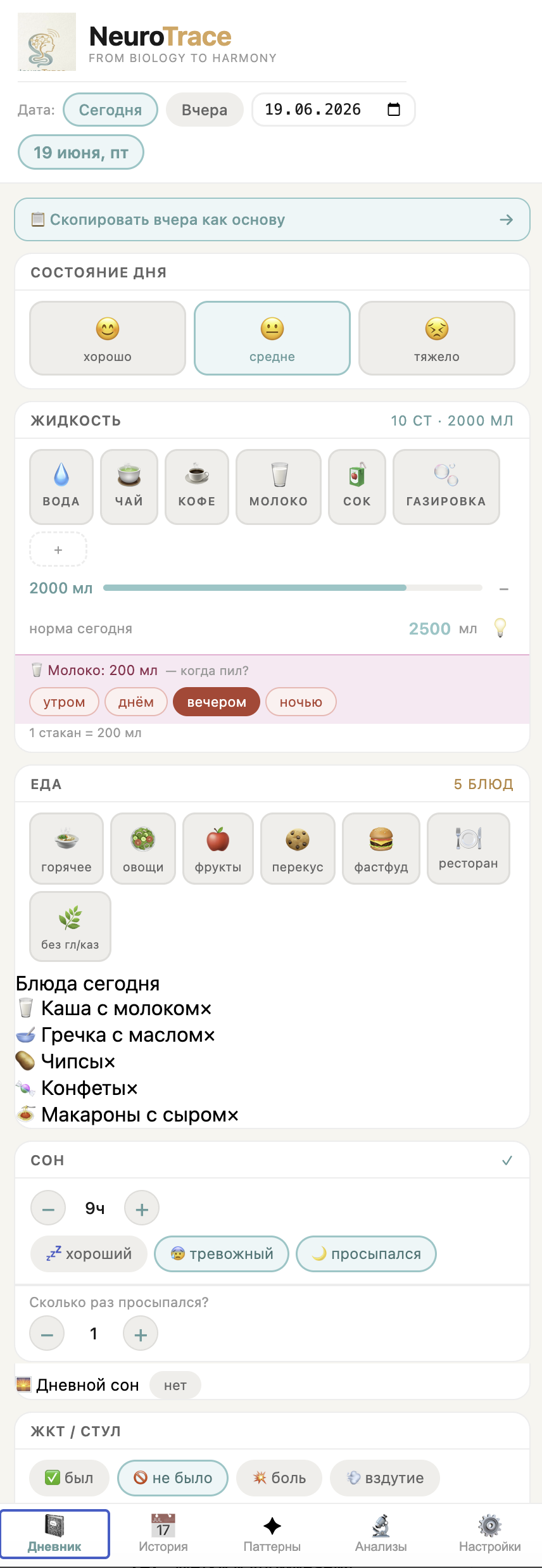
Daily Journal
Complete in just 2–3 minutes per day.
- Sleep
- Food
- Sensory Load
- Mood
- Symptoms
- Medications
No spreadsheets. No notebooks.
Patterns
After nights with frequent awakenings, SOS events occurred in 68% of cases compared to 22% after restful sleep.
NeuroTrace helps identify patterns that are difficult to notice manually.
What is inside
Tools that turn chaos into clarity
Sensory Profile
Tracks overload, shutdowns, and meltdowns to help recognize high-risk periods earlier.
Lab Hub
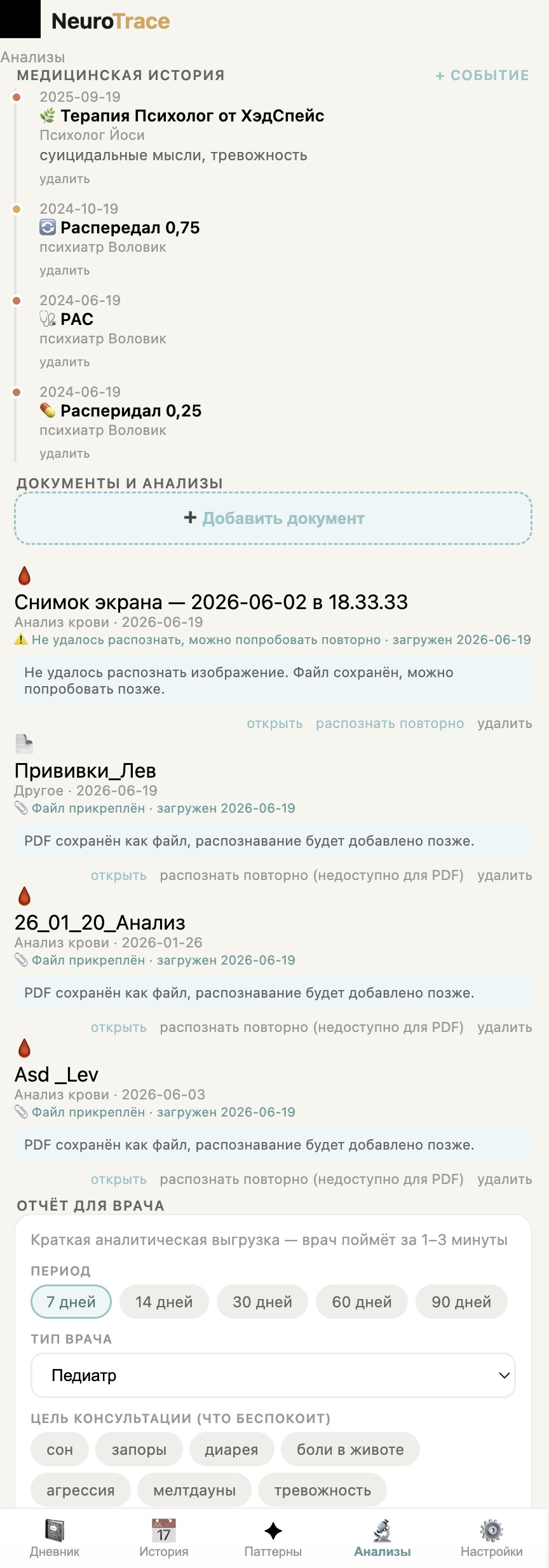
Stores lab results, medical documents, notes, and prepares a short summary for the doctor.
Not just a journal
Records alone rarely help
NeuroTrace is not just for storing data. It helps parents notice recurring patterns: what makes things worse, what helps, and what is worth discussing with a doctor.
Example of a recurring pattern
Doctor Report
Arrive at appointments with a clear story, not chaos in your head
Generate a report for a selected period: symptoms, nutrition, sleep, medications, important events, and observations. This helps make the conversation with the doctor more focused and practical.
Who it is for
NeuroTrace may be useful for families where recurring observations matter
Focus Group
We are now looking for our first participants
We are looking for parents who want to test NeuroTrace and help build a truly useful tool for families.
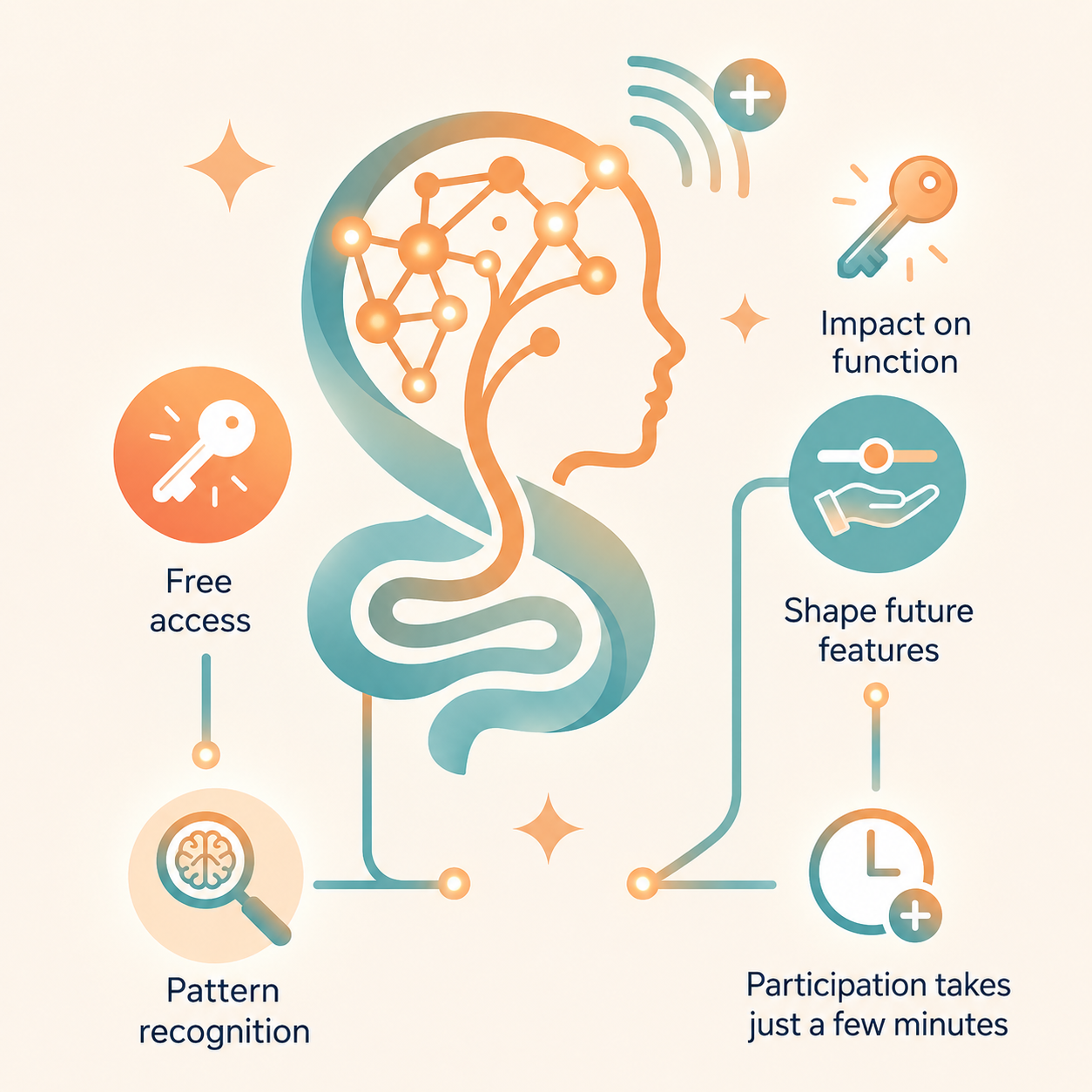
- free access during the testing period;
- an opportunity to influence future features;
- support in identifying patterns;
- participation takes only a few minutes a day.
You can choose to join the focus group or simply receive updates about NeuroTrace development.
FAQ
Frequently Asked Questions
Is NeuroTrace a medical app?
No. NeuroTrace does not diagnose and does not replace medical care. It helps structure observations and prepare information for discussion with a specialist.
Do I need to fill everything out every day?
No. You can start with the most important things: sleep, food, symptoms, and SOS events.
Can I use it if my child does not have an official diagnosis?
Yes. NeuroTrace may be useful when a child has recurring symptoms, behavioral reactions, or gastrointestinal difficulties.
Start noticing what used to get lost in the chaos of everyday life
You can choose to join the focus group or simply receive updates about NeuroTrace development.
Focus Group Application
Would you like to test NeuroTrace?
Fill out the application. After submission I will contact you via phone or WhatsApp and explain the next steps.
After submitting this form, we will contact you via Phone or WhatsApp to provide access to NeuroTrace.
Project Updates
Want to follow NeuroTrace development?
Leave your name, email and an optional comment. I will send important project updates.